Can Never Be Happy Again After Drug Overdose

Anna Mable-Jones, age 56, lost a decade to cocaine habit. Now she'south a homeowner, she started a small business organisation and says life is "crawly." Walter Ray Watson/NPR hide explanation
toggle caption
Walter Ray Watson/NPR
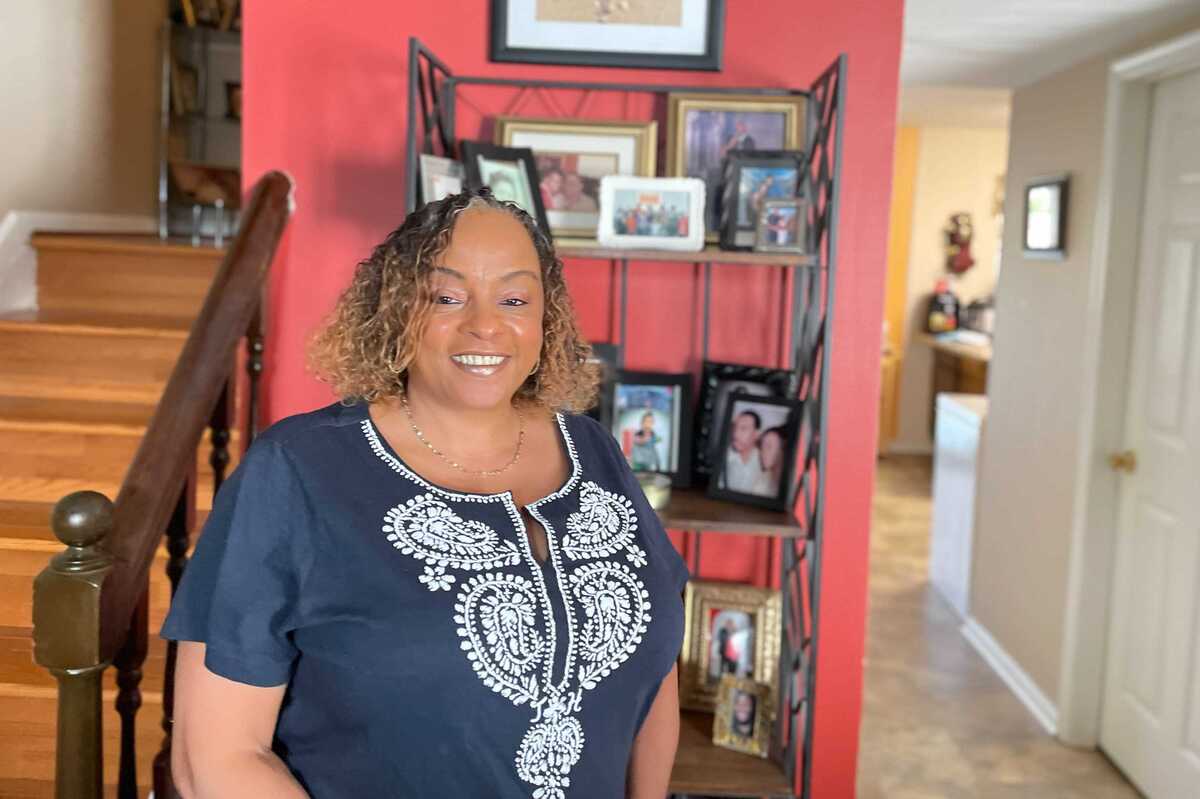
Anna Mable-Jones, age 56, lost a decade to cocaine addiction. Now she'southward a homeowner, she started a small business organisation and says life is "awesome."
Walter Ray Watson/NPR
The U.South. faces an unprecedented surge of drug deaths, with the Centers for Disease Control and Prevention reporting another grim milestone this week.
In a single 12-month menses, fatal overdoses claimed 101,623 lives.
But researchers and drug policy experts say the grim toll obscures an important and hopeful fact: Most Americans who experience alcohol and drug addiction survive.
They recover and continue to live total and good for you lives.
"This is actually good news I recollect and something to share and be hopeful about," said Dr. John Kelly, who teaches addiction medicine at Harvard Medical School and heads the Recovery Research Institute at Massachusetts General Hospital.
Kelly co-authored a peer-reviewed study published last yr that found roughly 22.3 1000000 Americans — more than 9% of adults — live in recovery after some form of substance-use disorder.
A divide study published by the CDC and the National Institute on Drug Abuse in 2022 constitute 3 out of 4 people who experience addiction somewhen recover.
"So that's huge, you lot know, 75%," Kelly said. "I think it kind of goes against our cultural perception that people never get better."
Life subsequently addiction isn't simply possible. Information technology's the norm
Americans often meet the more than subversive side of habit, drug crime, people slumped in doorways and family members who are spiraling downward.
Less visible are the people who survive the illness and rebuild their lives.
"Nosotros are literally surrounded by people who are in recovery from a substance-utilise disorder, but nosotros don't know information technology," Kelly said.
Anna Mable-Jones of Laurel, Md., is one of those success stories. In college, she began experimenting with crack cocaine.
"That simply took me for a total downwardly screw," the now-56-twelvemonth-erstwhile said.
Mable-Jones lost a decade to addiction, inbound rehab and relapsing repeatedly. It was a terrifying time for her and her family.
"My mother [started] calling the morgues," she recalled. "She'd phone call my sis and say ... 'I oasis't heard from Anna.' "
Merely in a pattern researchers say is common, Mable-Jones' affliction somewhen eased. She found treatment that worked and has lived drug-costless for more than 20 years.
"Things that I thought I would never gain again, through the procedure of recovery I have them all," she said. "Today I'm a homeowner, I own a car, I started my own business."
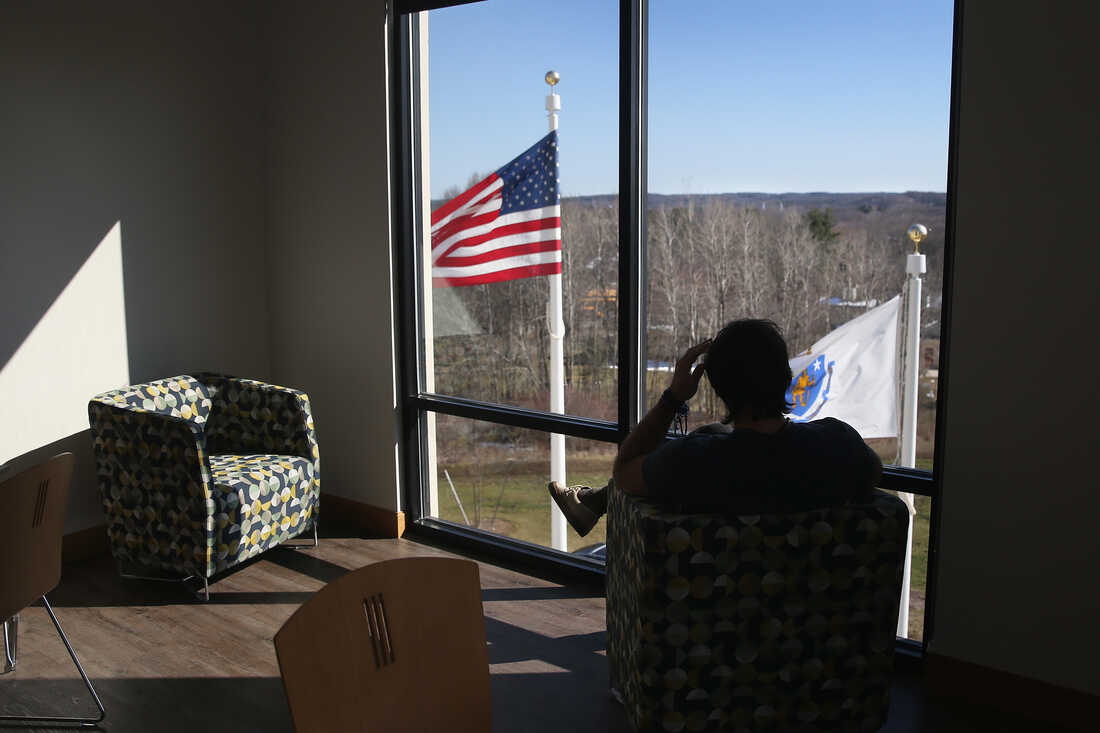
A person in recovery for drug addiction looks out from a substance abuse treatment eye in Westborough, Mass. John Moore/Getty Images hide caption
toggle caption
John Moore/Getty Images
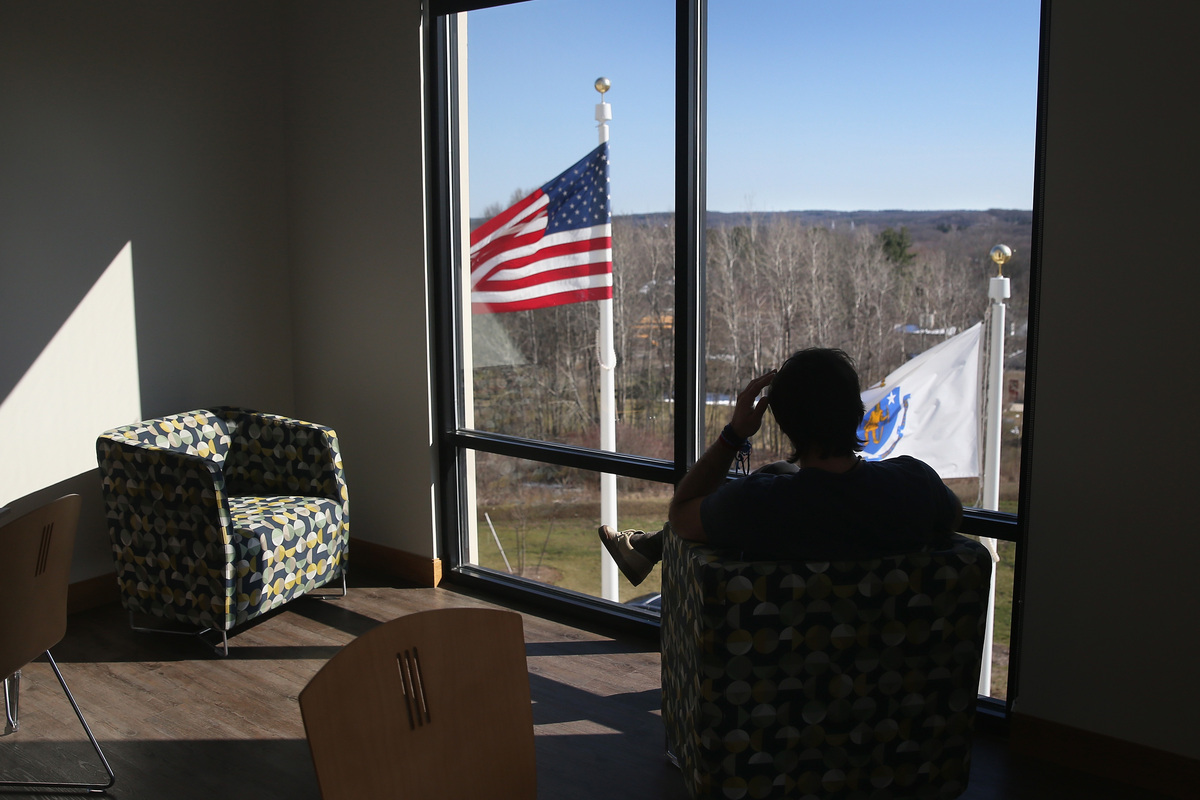
A person in recovery for drug addiction looks out from a substance corruption treatment center in Westborough, Mass.
John Moore/Getty Images
Addiction is hard to beat out, and that leads to stigma
Researchers say this data — and this lived experience — contradicts a widespread misperception that substance-employ disorder is a permanent illness and oftentimes fatal.
While tragic, the 100,000 fatal drug overdoses last yr really claimed the lives of a tiny percent of the 31.9 million Americans who use illegal drugs.
Similarly, the roughly 95,000 deaths each twelvemonth in the U.S. attributed to alcohol represent a fraction of high-risk drinkers.
So why is this ailment ofttimes characterized as intractable and hopeless?
Recovery experts say one reason is the fact that addiction is agonizing and difficult to care for.
"Hopeless despair — that's a good way to describe information technology," said 34-yr-old Travis Rasco, who lives in Plattsburgh, a small industrial city in upstate New York.
"I wanted to quit, I simply couldn't," he said, describing his decade-long struggle with heroin.

Travis Rasco used heroin for a decade. Now he's been drug-gratis for four years, has a career, a wife and a new baby. Brian Isle of mann/NPR hide caption
toggle caption
Brian Mann/NPR
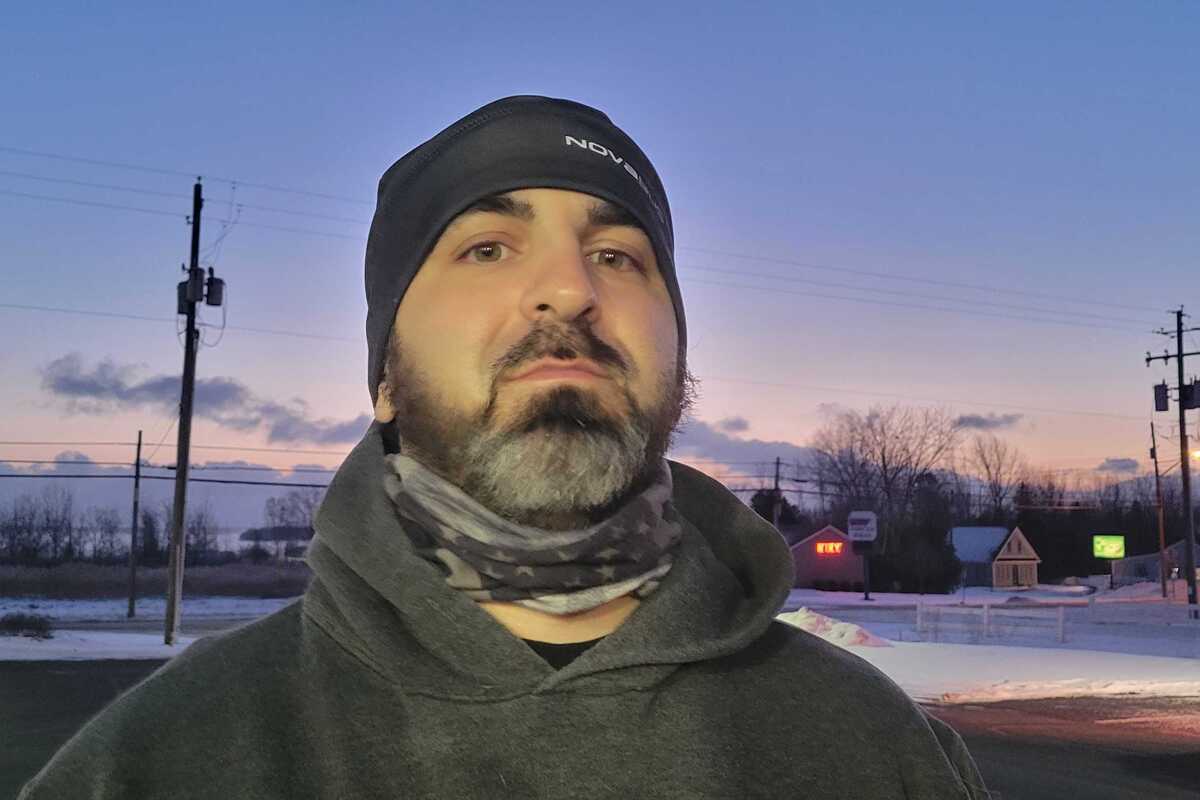
Travis Rasco used heroin for a decade. Now he's been drug-gratuitous for four years, has a career, a married woman and a new baby.
Brian Isle of man/NPR
Rasco relapsed again and once more, causing his family enormous pain. "I didn't desire to exist that person, merely I didn't know what to do," he said.
Studies bear witness people ordinarily recover, only as with Rasco and Mable-Jones, the procedure happens slowly afterwards multiple relapses.
Information technology typically takes 8 years or longer to accomplish long-term remission even with loftier quality treatment and medical care.
Rasco was working two jobs to feed his heroin habit when he finally constitute a path forward in 2018.
"I took a pretty lengthy ambulance ride [afterward an overdose] and something happened in that ambulance," he said, describing an emotional pivot that felt unlike: "This is non the way to live."
He was also able to convince his insurance company to pay for longer-term treatment.
"They fought to just go along me in [rehab] for fourteen days; they didn't want to pay for thirty, and I knew that wasn't enough for me," Rasco recalled. "They didn't desire to put me in a halfway firm. I knew I needed a half-way business firm."
This time it worked. He's at present lived drug-free for near 4 years, married, and has a newborn babe.
"We're trying to buy a business firm correct now. Something I never thought would exist possible, something I never thought I deserved for the longest time," Rasco said.
After the healing, a meliorate life
Recovery rates aren't the aforementioned for all people. At that place are stark differences in how the body and brain reply to alcohol and unlike drugs.
Studies also prove racial bias makes it harder for Black and Hispanic Americans to find treatment. People in rural areas tend to have less access to health care.
Meanwhile those with more financial resources or milder forms of addiction oftentimes heal faster.
But even people who employ harder drugs for long periods practice typically recover.
"That 75% number [of people who achieve remission] includes obviously people at the more severe stop of the spectrum," said Dr. David Eddie, who co-authored the study on recovery success and besides teaches at Harvard Medical Schoolhouse. "So there is absolutely promise."
Indeed, well-nigh people people don't just survive addiction. Research suggests they ofttimes thrive in long-term recovery, reconnecting with family and enjoying economic success.
"They end up achieving things they wouldn't have achieved if they hadn't gone through the hell of addiction," Eddie said.
Researchers say these hopeful findings are significant considering they might inspire people to keep attempting recovery even after they suffer multiple relapses.
"That can be a challenging affair to confront," Eddie said. "How practice you keep getting back on the horse afterwards repeated attempts that accept failed?"
Is fentanyl a game-changer?
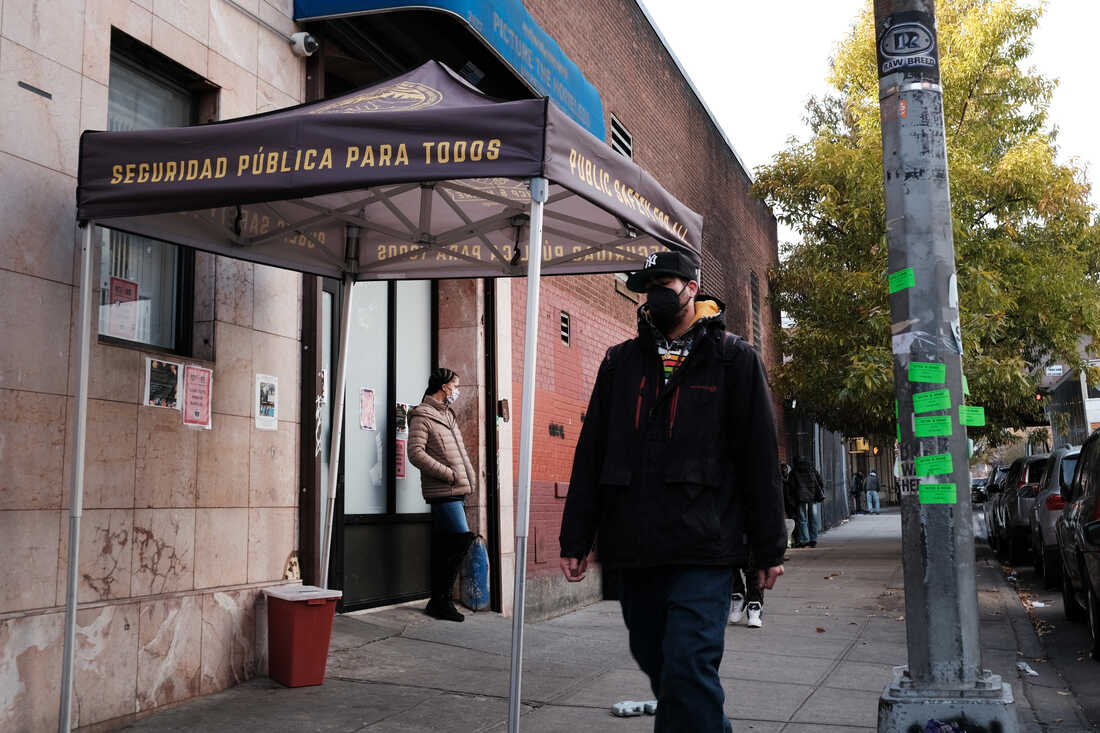
People walk past an East Harlem health clinic that offers free needles and other services to drug users on in New York. Spencer Platt/Getty Images hibernate caption
toggle caption
Spencer Platt/Getty Images

People walk by an Due east Harlem health clinic that offers free needles and other services to drug users on in New York.
Spencer Platt/Getty Images
One troubling question is whether this pattern — multiple relapses leading to eventual recovery — will continue now that more street drugs are contaminated with the deadly synthetic opioid fentanyl.
"Information technology's killing them on the beginning try," said Anna Mable-Jones. "It'southward not giving them enough tries, as I may accept had."
Some communities are trying to help, providing agile drug users with clean needles and making the overdose-reversal drug Narcan more widely bachelor.
New York City recently opened the nation'southward beginning official condom consumption clinics, where people with substance use disorder can use drugs under medical supervision.
Eddie said their research suggests more needs to be washed to continue people alive while the healing process works.
"Nobody recovered from addiction dead. My feeling is if we can go on people alive long enough, we know eventually the majority go recovery," he said.
Travis Rasco in Upstate New York says he's grateful he got enough time, plenty chances and enough help to rebuild his life.
"I take all the good things in life that everybody talks most," he said. "I'm worthy of that too. Once you become to that place it'south pretty liberating."
Source: https://www.npr.org/2022/01/15/1071282194/addiction-substance-recovery-treatment

Post a Comment for "Can Never Be Happy Again After Drug Overdose"